The Denial Letter and the Reasons It Must Give
A refusal to pay has to be written down and explained rather than simply communicated. Regulators require the provision relied on to be identified by name, and an insurer that denies on one ground may have real difficulty producing a different one afterward.

The rule in short
State claims practices rules require a written decision within a stated period and a reasonable explanation of the basis in the policy or the law. Ohio bars denying a claim on a specific policy provision, condition or exclusion unless the denial refers to it, and requires a decision within twenty-one days of a properly executed proof of loss. Florida requires payment or denial within sixty days with a written explanation.
The denial letter is the document the rest of the dispute is built on. It fixes the insurer's stated position, it tells the claimant what has to be answered, and in several states it limits what the insurer may argue afterward. A letter that says only that the claim does not fall within the coverage has communicated nothing that can be responded to, and regulators treat that as a defect rather than as a style choice.
The decision and its deadline
Insurers do not have unlimited time to decide. Ohio requires an insurer to decide within twenty-one days of receiving properly executed proofs of loss whether to accept or deny the claim, and where more time is needed for investigation, to notify the claimant within that period with an explanation of the need and a continuing obligation to report on the status at least every forty-five days. Florida requires an insurer to pay or deny a property claim, or a portion of it, within sixty days of receiving notice, absent factors beyond its control.
Missing those periods has consequences beyond regulatory exposure. Florida attaches interest to a payment made after the statutory period, running from the date the insurer received notice of the claim. Wisconsin treats a claim as overdue if it is not paid within thirty days after the insurer is furnished written notice of the fact of a covered loss and of the amount, with simple interest on all overdue payments at a statutory rate.
What the letter must say
Specificity is the recurring requirement. Ohio's rule provides that no insurer shall deny a claim on the grounds of a specific policy provision, condition or exclusion unless reference to that provision, condition or exclusion is included in the denial, and requires the claim file to document the denial. Wisconsin treats the failure, on a claimant's request, to promptly provide a reasonable explanation of the basis in the policy contract or applicable law for a denial or for a compromise offer as an unfair claim settlement practice.
Those two requirements sit at slightly different points. The Ohio rule conditions the insurer's ability to rely on a ground at all; the Wisconsin rule requires an explanation on request and defines promptness elsewhere in the same regulation. Together they describe the ordinary expectation: a written statement identifying the provision, applying it to the facts the insurer found, and doing so in terms a claimant can test.
The obligation is also a claims handling standard rather than a formality. California's unfair practices provision defines unfair and deceptive acts in the business of insurance, and the state regulations built on it, like the rules in Ohio and Wisconsin, are enforced by examination of claim files rather than by individual litigation in most instances. A poorly reasoned letter therefore creates two separate problems for an insurer: a weaker position on the claim, and a file that reads badly in a market conduct review.
| Communication | What it does | What it does not do |
|---|---|---|
| Acknowledgment of the claim | Confirms the report was received | Say anything about coverage |
| Reservation of rights | Preserves defenses during investigation | Refuse the claim or start suit clocks |
| Partial denial | Refuses part and pays or continues the rest | End the adjustment of the remainder |
| Denial | States the ground and refuses payment | Extend the contractual period to sue |
| Closure without payment | Ends the file administratively | Substitute for a stated reason |
Because the contractual limitation period in the standard forms runs from inception of the loss, a denial arriving late in that period leaves only what remains of it. Correspondence disputing the denial, a request for reconsideration and a complaint to a regulator do not stop the clock by themselves. Anyone measuring how much time is left should count from the loss, not from the letter, and check the applicable limitation rules before relying on an internal appeal.
Reservations and partial denials
Not every adverse communication is a denial. A reservation of rights tells the claimant that the insurer will continue investigating or will make a payment while preserving defenses that may turn out to apply. It is a protective device for the insurer and, incidentally, a warning to the claimant that a defense is in view. It does not refuse anything, and treating it as a denial can waste the response time it was meant to preserve.
A partial denial is more common still. An insurer may accept the water damage and refuse the mold, accept the structure and refuse the contents, or pay actual cash value and refuse the withheld depreciation. Each refused component needs its own stated ground, and each accepted component keeps its own timetable. Where the disagreement about the accepted part is only about the figure, the appraisal mechanism may resolve it without touching the refused part at all.
Grounds not stated
Whether an insurer may later rely on a ground it did not give is a genuine point of divergence. Some states apply a rule that an insurer which denies on specified grounds is precluded from shifting to different ones in litigation, on the reasoning that the claimant was entitled to know the real objection. Others allow new grounds to be raised, treating the letter as a communication rather than as an election. Ohio's regulation approaches the question from the regulatory side by conditioning reliance on a provision being referenced in the denial.
Most letters try to handle the problem with a catchall reserving all other rights and defenses under the policy and at law. How much that sentence achieves varies by state, and it does not satisfy a rule that requires the specific provision to be named. Where a denial rests on a failure to cooperate or to produce, the letter has to identify what was demanded and what was not supplied, which ties it back to the records the insurer asked for.
What follows a denial
The immediate practical step is to obtain the file material the insurer relied on. California requires an insurer to notify every claimant that copies of claim-related documents may be obtained on request, and defines those documents broadly to include repair and replacement estimates and bids, appraisals, scopes of loss, drawings, plans, reports, third-party findings on the amount of loss and other valuation and loss adjustment calculations, while excluding attorney work product, privileged communications, documents indicating fraud by the insured and medically privileged material.
From there the routes diverge. A denial resting on a factual finding is answered with contrary evidence; one resting on a policy provision is answered by construction of the provision. A complaint to the state regulator addresses claim handling rather than entitlement and does not produce payment. Where the conduct itself is alleged to be unreasonable rather than merely wrong, the question moves into the standards that separate bad faith from an incorrect decision.
Points to carry away
- A denial must be in writing and must state the basis in the policy or in the law.
- Ohio forbids reliance on a provision, condition or exclusion unless the denial letter refers to it.
- Ohio requires a decision within twenty-one days of receiving a properly executed proof of loss.
- Florida requires an insurer to pay or deny a property claim within sixty days with a reasonable written explanation.
- A reservation of rights is not a denial; it preserves defenses while the investigation continues.
Questions readers ask
Does an insurer have to quote the policy language?
Rules generally require the basis to be identified rather than reproduced. Ohio bars denying a claim on the grounds of a specific policy provision, condition or exclusion unless reference to it is included in the denial, which means naming the provision rather than transcribing it. Wisconsin requires a reasonable explanation of the basis in the policy contract or applicable law on a claimant's request. A letter that recites a general conclusion without connecting it to a provision meets neither standard.
What is a reservation of rights?
It is a written statement that the insurer is investigating or paying while preserving defenses that may later apply, so that its conduct is not treated as an acceptance of coverage. It is not a denial and does not start whatever clocks a denial starts. Its practical importance is that an insurer which adjusts a claim for months without reserving may face an argument that it waived a defense or is estopped from raising it, particularly where the claimant relied on the insurer's conduct.
Can a denial be reconsidered?
Yes, and insurers reopen claims routinely when new information arrives. A denial is a position rather than a judgment, and supplying the document or the expert report that answers the stated reason is often more effective than disputing the letter. What a reconsideration does not usually do is restart the contractual period for suing, which in the standard forms runs from the loss, so the practical course is to pursue reconsideration and keep the deadline in view at the same time.
Sources
- Ohio Administrative Code Rule 3901-1-54Bars a denial on a provision not referenced in it and sets the twenty-one day decision period.
- Wisconsin Administrative Code Ins 6.11Treats failure to give a reasonable explanation for a denial or compromise offer as an unfair practice.
- Florida Statutes § 627.70131Requires payment or denial within sixty days with a written explanation, and adds interest when late.
- California Insurance Code § 790.03Defines unfair methods of competition and unfair or deceptive acts in the business of insurance.
- California Insurance Code § 2071Requires claimants to be told they may obtain copies of claim-related documents on request.
- Wisconsin Statutes § 628.46Makes a claim overdue thirty days after written notice and imposes interest on the overdue amount.
Rapid Response Law is a publication, not a law firm. This article states general rules and cites its sources; it is not advice about any particular case, and the law differs by state and changes over time.
More in Insurance Claims
Actual Cash Value, Replacement Cost and the Holdback
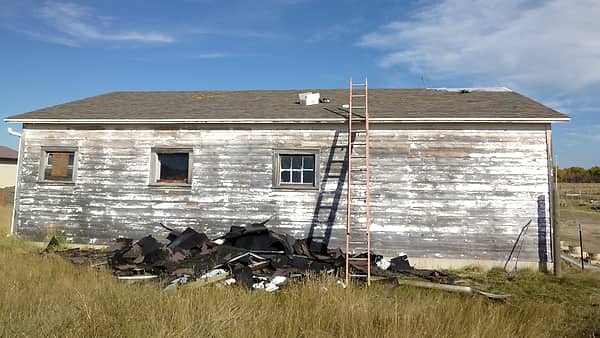
Actual cash value is commonly measured as the cost to repair, rebuild or replace less a fair deduction for physical depreciation, and California limits that deduction to components normally subject to repair during a structure's useful life. Replacement cost coverage pays the full cost, but the standard mechanism advances actual cash value first and releases the depreciation holdback when repairs are complete, within a period the policy or a statute sets.
Bad Faith and What Distinguishes It From a Wrong Decision
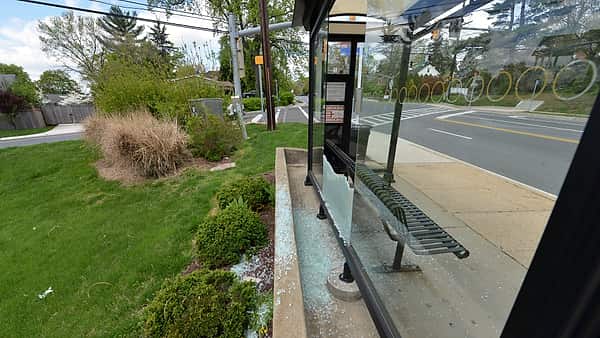
A denial that turns out to be mistaken is a breach of contract. Bad faith requires more: conduct that was unreasonable, or a failure to attempt in good faith to settle where the insurer could and should have done so. Florida creates a statutory civil remedy conditioned on sixty days of written notice with an opportunity to cure, and provides that mere negligence alone is insufficient. Several states also impose interest on overdue payments.

Additional Living Expenses While a Home Is Unusable
Additional living expense coverage pays the increase in the cost of living while a residence is uninhabitable after a covered loss. California requires an insurer to give the claimant a list of items it believes may be covered, sets a floor of twenty-four months for losses connected with a declared state of emergency with extensions to thirty-six, requires two weeks where a civil authority order restricts access, and allows an advance of four months on a total loss.