Which employers the federal notice statute covers and how employees are counted, the plant closing and mass layoff thresholds, the sixty days of notice and what the notice must contain, aggregating separate reductions over a rolling period, the three statutory exceptions and how narrowly they are read, state statutes that demand more, the damages an employer owes for a short notice, and the final pay obligations that run alongside.
Where a statutory exception applies, the employer must give as much notice as is practicable to the union, non-represented employees, the state dislocated worker unit and the unit of local government, and the regulation acknowledges that in some circumstances this may be notice after the fact. At the time notice is actually given, the employer must also provide a brief statement of the reason for reducing the notice period, in addition to the ordinary content elements.
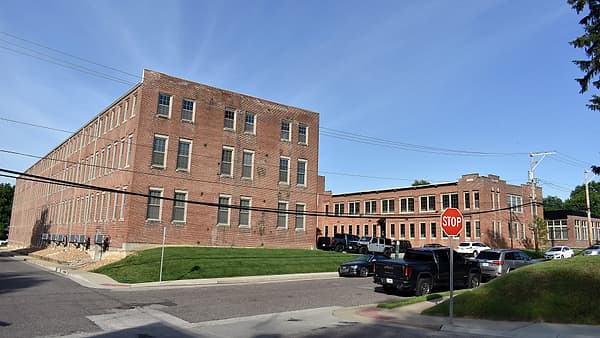
A single site of employment can be one location or a group of contiguous locations, and a campus or industrial park may be one site. Separate buildings not in immediate proximity may still be one site where they are reasonably close, used for the same purpose and share staff and equipment. Contiguous buildings with separate management, different products and separate workforces are separate sites. Mobile and outstationed workers belong to the home base from which their work is assigned.
State notice statutes depart from the federal model in four directions. California sets coverage at a seventy-five person establishment and counts a mass layoff at fifty separations without any percentage test. New York halves the employer threshold, sets closings at twenty-five and requires ninety days. Maine requires ninety days to a state official before a closing or relocation and imposes severance pay of one week per year of service.
Notice must be given at least sixty calendar days before a planned closing or mass layoff. Where separations occur on different days, the first individual termination within the statutory thirty-day or ninety-day period triggers the requirement, and each subsequent group of terminees is entitled to a full sixty days. A notice may express the date as a specific day or as a fourteen-day period, in which case the sixty days run from the first day of that period.
An employer ordering a covered closing or mass layoff in violation of the notice requirement is liable to each aggrieved employee for back pay at the higher of the average rate over the last three years or the final rate, plus benefits including medical costs that would have been covered. Liability runs for the period of the violation up to sixty days, and never beyond half the days the employee worked. A separate penalty of up to five hundred dollars a day runs to a local government.
The federal notice statute reaches a business enterprise employing one hundred or more employees excluding part-time employees, or one hundred or more employees who in the aggregate work at least four thousand hours per week exclusive of overtime. Part-time means an average of fewer than twenty hours a week, or employment for fewer than six of the preceding twelve months. The count is taken on the date the first notice would be required, and workers awaiting recall are counted.
The statute allows a shortened notice period in three situations. The faltering company exception applies only to plant closings and requires four conditions to be met together. The unforeseeable business circumstances exception turns on a sudden, dramatic and unexpected condition outside the employer's control, tested against commercially reasonable judgment. The natural disaster exception requires the action to be a direct result of the disaster. The employer bears the burden throughout.
Employment losses for two or more groups at a single site, each below the statutory minimum but exceeding it in the aggregate, are treated as a plant closing or mass layoff if they occur within any ninety-day period. The employer can rebut that treatment by demonstrating that the losses result from separate and distinct actions and causes and are not an attempt to evade the requirements. The regulation requires employers to look ninety days forward and ninety days back before deciding.
A plant closing is the permanent or temporary shutdown of a single site of employment, or of one or more facilities or operating units within it, causing employment loss for fifty or more employees excluding part-time employees in any thirty-day period. A mass layoff is a reduction in force that is not a closing and causes employment loss for at least thirty-three percent of the active employees and at least fifty employees, or for at least five hundred employees regardless of proportion.
Notice goes to each representative of affected employees or, where there is none, to each affected employee, and separately to the state dislocated worker unit and the chief elected official of the local government. The four recipients receive different content. Representatives get job titles and the names of workers holding affected jobs; individual employees get their own expected separation date and whether bumping rights exist; officials get counts by job classification and union contacts.
Final wage deadlines are set by state law and run independently of any layoff notice obligation. California requires wages unpaid at discharge to be paid immediately and treats vested vacation as wages, with no forfeiture permitted. Massachusetts requires payment in full on the day of discharge. New York sets the regular pay day for the period in which termination occurred, and California continues wages as a penalty for up to thirty days where payment is willfully withheld.