Actual Cash Value, Replacement Cost and the Holdback
The same damaged roof produces two different numbers depending on which measure the policy uses. Replacement cost pays what a repair costs; actual cash value pays that figure less depreciation, and the difference is usually held back until the work is done.
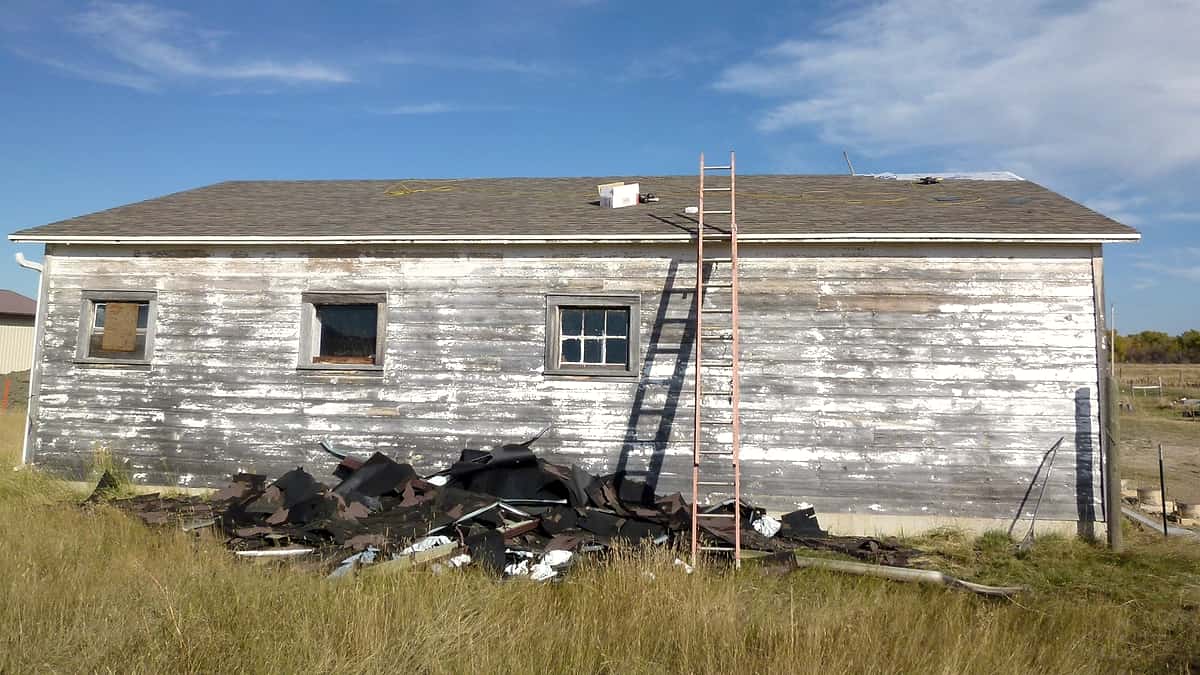
The rule in short
Actual cash value is commonly measured as the cost to repair, rebuild or replace less a fair deduction for physical depreciation, and California limits that deduction to components normally subject to repair during a structure's useful life. Replacement cost coverage pays the full cost, but the standard mechanism advances actual cash value first and releases the depreciation holdback when repairs are complete, within a period the policy or a statute sets.
Two policies can cover the same house for the same limit and pay very different amounts for the same fire. The variable is the measure of indemnity. One pays what it costs to put the property back; the other pays that figure reduced by what the property had already used up before the loss. Almost every dispute about the size of a property payment is, at bottom, a dispute about which measure applies and how the reduction was computed.
The two measures
Actual cash value is the older concept and the one the statutory fire policy forms are built around. California defines the recovery under an open policy requiring actual cash value as the amount it would cost the insured to repair, rebuild or replace the thing lost or injured, less a fair and reasonable deduction for physical depreciation based on its condition at the time of the injury, or the policy limit, whichever is less. Other states reach similar results through market value or a broad-evidence approach that allows a range of indicators.
Replacement cost coverage removes the deduction. California's measure is the amount to repair, rebuild or replace without a depreciation reduction, subject to the limit. It is not the default; it is coverage the insured buys, and Florida requires an insurer to offer it on a homeowners policy in stated forms before the policy is issued. Whether it applies is a question about the declarations page rather than about the loss.
A third measure appears in commercial and specialty forms. Agreed value fixes the figure in advance and suspends the coinsurance condition; functional replacement cost pays for restoring utility with modern equivalents rather than matching original materials, which matters for older buildings; and stated amount coverage caps rather than fixes recovery. None of these is exotic, and reading the declarations before arguing about depreciation is what keeps a valuation dispute from starting on the wrong footing.
How depreciation is deducted
Depreciation reflects age and wear. A twenty-year-old roof with a twenty-five-year expected life has consumed most of its usefulness, and the actual cash value of the loss is correspondingly small. The calculation depends on assumptions about useful life, condition and the period of ownership, and reasonable adjusters differ, which is why valuation is the classic subject for the appraisal process.
Two limits recur. California restricts the deduction to components of a structure normally subject to repair and replacement during that structure's useful life, so foundations and framing are not depreciated in the way shingles and paint are. And states divide on whether the labor element of a repair may be depreciated at all, since labor does not wear out; the split is real, and it changes the figure on any claim where installation costs more than materials.
| Feature | Actual cash value | Replacement cost |
|---|---|---|
| What is paid | Repair cost less physical depreciation | Repair cost without the depreciation deduction |
| Timing of payment | Paid on adjustment of the loss | Advance of actual cash value, balance on completion |
| Repair required | No; the money is paid either way | Usually yes, to collect the withheld portion |
| Effect of a total loss | Value at the time of loss, up to the limit | Full cost up to the limit, without holdback in Florida |
| Typical dispute | The depreciation assumptions | Whether repairs were completed in time |
Under the usual replacement cost mechanism the depreciation is recoverable, meaning it is paid once the repair or replacement is actually made and documented. It is not a permanent reduction and it is not a penalty. What makes it costly is the sequencing: the policyholder finances the gap between the first payment and the finished work, and a policyholder who cannot bridge that gap may never collect the second payment at all.
The second payment and its deadline
Replacement cost provisions attach a period. California provides that where the insured must repair, rebuild or replace to collect the full replacement cost, the insurer pays actual cash value first and then the difference up to the limit, and that no time limit of less than twelve months from the date of the first actual cash value payment may be imposed for collecting the full replacement cost. Longer periods apply to losses connected with a declared state of emergency.
Florida legislates the mechanics for personal property. An insurer must offer coverage obliging it to pay replacement cost without holdback whether or not the insured replaces the property, and may alternatively offer coverage that limits the initial payment to actual cash value, requires receipts for purchases financed by that payment, uses those receipts to fund the next payment, and repeats the cycle up to the limit. Clear notice of that process must be given before the policy is bound, and the insurer may not require the policyholder to advance payment.
Total losses and valued policy statutes
Total losses are treated separately in several states. Florida requires that where a total loss of a dwelling occurs, the insurer pay the replacement cost coverage without reservation or holdback of any depreciation. Wisconsin's valued policy provision goes further, making the policy limit the conclusive amount of loss where an owner-occupied dwelling is wholly destroyed without criminal fault by the insured or the insured's assigns.
Those rules remove valuation from the argument and move it elsewhere. Where a statute fixes the total-loss recovery at the limit, the contested questions become whether the destruction was total, whether the property was owner-occupied as a dwelling, and whether the conduct exclusion applies, which is exactly the ground an insurer explores through an examination under oath.
Matching and the scope of repair
A separate question is how much has to be repaired. Replacing eight damaged siding panels on a wall of forty leaves a visible patch, and states differ on whether the insurer must pay to make the repair reasonably uniform in appearance or only to restore the damaged portion. Some regulate matching directly for particular materials; others leave it to the policy and to what a reasonable repair means in that market.
Whichever measure applies, the schedule submitted with the sworn proof of loss should be prepared on the same basis the policy uses, and an estimate built on replacement cost where the coverage pays actual cash value invites a dispute that has nothing to do with the damage. Where the disagreement is genuinely about depreciation figures rather than about coverage, the valuation mechanism in the policy is usually a faster route than a lawsuit.
Contents claims raise the same choice in a different shape. Personal property is depreciated far more aggressively than a structure, because clothing, electronics and furnishings have short useful lives, so the gap between the two measures is proportionally larger. That is why the receipts process matters so much on a contents claim: without documented replacement purchases the recovery stops at the depreciated figure, however complete the original inventory was.
Points to carry away
- Actual cash value is generally repair or replacement cost less a deduction for physical depreciation.
- California confines depreciation to components normally subject to repair during the structure's useful life.
- Replacement cost coverage typically advances actual cash value and holds back depreciation until repairs are done.
- California allows twelve months from the first actual cash value payment to collect the full replacement cost.
- Florida requires replacement cost for a total loss of a dwelling without any holdback for depreciation.
Questions readers ask
Is depreciation calculated the same way everywhere?
No. Physical depreciation reflecting age, wear and remaining useful life is the common approach, but states differ on whether labor may be depreciated as well as materials, and the answer changes the figure substantially on a roof or a siding claim. Some states forbid depreciating labor, some permit it, and some leave it to the policy wording. California restricts the deduction to components of a structure normally subject to repair and replacement during its useful life, which excludes long-lived structural elements.
What is a valued policy law?
It is a statute that fixes the recovery for a total loss at the policy limit rather than at proven value. Wisconsin provides that where a policy insures real property owned and occupied by the insured primarily as a dwelling and the property is wholly destroyed without criminal fault, the amount of the loss is conclusively the policy limits. The rule removes the valuation argument for total losses and shifts attention to whether the destruction was total and whether the exclusion for the insured's own conduct applies.
Does the deductible come off before or after depreciation?
Under the usual sequence the loss is valued, depreciation is deducted to reach actual cash value, and the deductible is then subtracted from that figure to produce the first payment. The withheld depreciation is released later as repairs are documented. Florida adds a wrinkle for roof deductibles by conditioning part of the payment on reasonable proof that the policyholder has paid it, listing a canceled check, money order receipt, card statement or a financing agreement as acceptable proof.
Sources
- California Insurance Code § 2051Defines the actual cash value recovery and limits the depreciation deduction by component.
- California Insurance Code § 2051.5Sets the replacement cost measure, the interim actual cash value payment and the collection period.
- Florida Statutes § 627.7011Requires replacement cost offers and bars a depreciation holdback on a total loss of a dwelling.
- Wisconsin Statutes § 632.05Makes the policy limit the conclusive measure where an owner-occupied dwelling is wholly destroyed.
- New York Insurance Law § 3404Frames the standard fire policy recovery in terms of actual cash value at the time of loss.
- Minnesota Statutes § 65A.01Prescribes the Minnesota standard fire policy and the loss settlement terms it must contain.
Rapid Response Law is a publication, not a law firm. This article states general rules and cites its sources; it is not advice about any particular case, and the law differs by state and changes over time.
More in Insurance Claims
Bad Faith and What Distinguishes It From a Wrong Decision
A denial that turns out to be mistaken is a breach of contract. Bad faith requires more: conduct that was unreasonable, or a failure to attempt in good faith to settle where the insurer could and should have done so. Florida creates a statutory civil remedy conditioned on sixty days of written notice with an opportunity to cure, and provides that mere negligence alone is insufficient. Several states also impose interest on overdue payments.

Additional Living Expenses While a Home Is Unusable
Additional living expense coverage pays the increase in the cost of living while a residence is uninhabitable after a covered loss. California requires an insurer to give the claimant a list of items it believes may be covered, sets a floor of twenty-four months for losses connected with a declared state of emergency with extensions to thirty-six, requires two weeks where a civil authority order restricts access, and allows an advance of four months on a total loss.

The Denial Letter and the Reasons It Must Give
State claims practices rules require a written decision within a stated period and a reasonable explanation of the basis in the policy or the law. Ohio bars denying a claim on a specific policy provision, condition or exclusion unless the denial refers to it, and requires a decision within twenty-one days of a properly executed proof of loss. Florida requires payment or denial within sixty days with a written explanation.