Documents an Insurer May Demand
The production obligation sits beside the examination under oath and is argued about more often. It reaches the records that prove ownership, value and cause, and it stops where the demand stops being relevant to the claim.
The rule in short
Standard policy conditions require the insured to produce books of account, bills, invoices and other vouchers, or certified copies, at a reasonable time and place and to permit copies to be made. California limits the examination process to information relevant and reasonably necessary to investigate the claim. Ohio requires an insurer that treats the form of a submission as material to supply the specific documents and instructions itself.
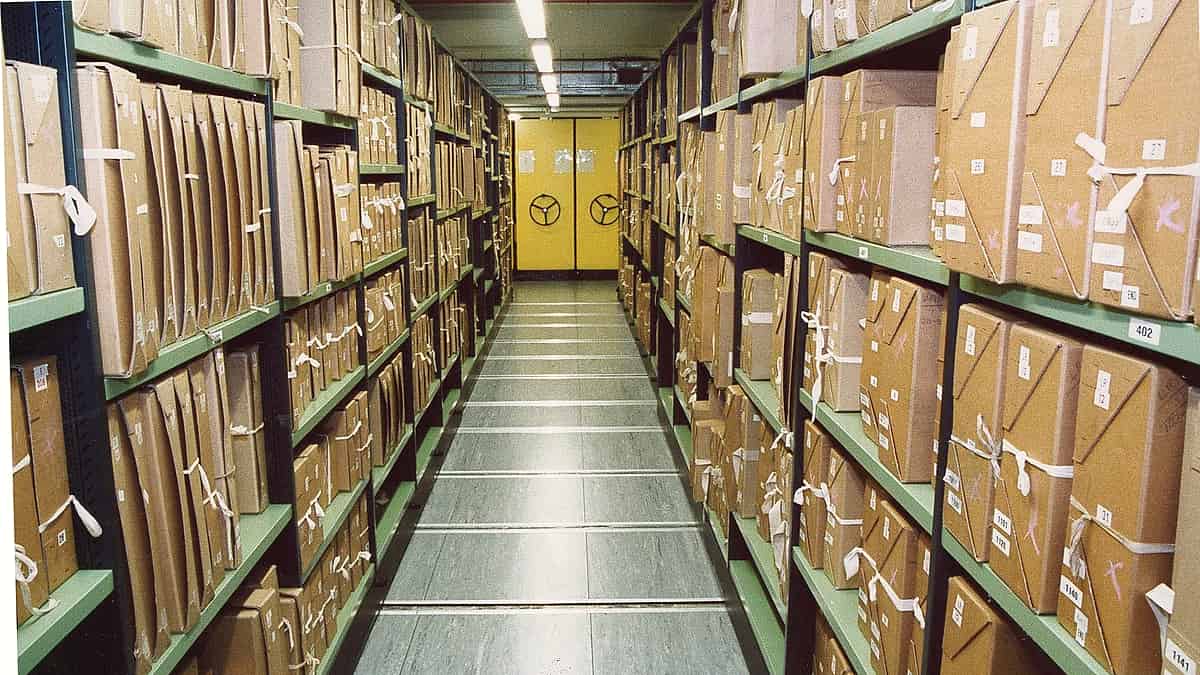
Paper decides property claims. Whether an item existed, who owned it, what it cost, when it was damaged and what repairs were done are all questions answered by records rather than by recollection, and the policy gives the insurer a right to see them. The condition is short and the disputes it generates are long, because the boundary between proving a claim and opening a life to inspection is not drawn anywhere in the text.
What the condition covers
In the statutory fire policy forms the production obligation is part of the requirements in case loss occurs. The insured shall, as often as may be reasonably required, produce for examination all books of account, bills, invoices and other vouchers, or certified copies if the originals are lost, at a reasonable time and place designated by the company or its representative, and shall permit extracts and copies to be made. The same conditions require the insured to exhibit the damaged and undamaged property as often as reasonably required.
Three limits are already visible in that sentence. The demand must be reasonable in frequency, in timing and in place; the documents named are financial records of the kind that establish ownership and value; and the insurer's entitlement is to examine and copy rather than to take. Modern forms restate the obligation in less archaic language, and some add records in electronic form, but the structure is the same.
The records usually requested
A routine property claim generates a predictable list. Proof of ownership comes from receipts, purchase orders, card and bank statements, warranty registrations, photographs and, for vehicles and real property, title records. Value comes from appraisals, prior estimates, contractor bids and, for a business, inventory schedules and depreciation records. Cause comes from maintenance and repair records, prior inspection reports and permits.
Larger or contested claims draw broader requests: tax returns, profit and loss statements, mortgage and loan documents, utility records establishing occupancy, and correspondence with contractors. Where a business interruption element exists, the accounting records become the claim itself rather than support for it. The demands escalate with the amount at stake, and the escalation is not by itself evidence that anything is wrong.
Records generated after the loss matter as much as the ones that predate it. Photographs taken during cleanup, receipts for emergency mitigation, invoices from a restoration contractor, temporary lodging bills and communications with a mortgage servicer all bear on what is owed. Those documents are usually within the policyholder's control and easy to lose, and their absence tends to reduce a claim quietly rather than to defeat it outright.
| Category | What it establishes | Usual source |
|---|---|---|
| Receipts and statements | Existence, ownership and original cost | The insured, or duplicates from the seller |
| Contractor estimates and invoices | Scope of repair and its price | The contractor, on request |
| Maintenance and inspection records | Prior condition and cause of loss | The insured and prior service providers |
| Tax and accounting records | Business income and inventory values | The insured's accountant |
| Third-party records by authorization | Banking, employment or medical facts | The institution, on a signed release |
California states in statute that the examination process may be used only to obtain information relevant and reasonably necessary to process or investigate the claim, and that standard is the analytical tool everywhere even where it is not legislated. A demand is answered by asking what fact in this claim the document would establish. Where the answer is a specific disputed issue, the demand is defensible; where the answer is that the insurer would like to know more about the claimant, it is not.
Limits on the demand
Three limits do most of the work. The first is relevance, applied document by document rather than to the request as a whole, so a demand can be partly answerable and partly not. The second is reasonableness in mechanics: the volume requested, the time allowed, whether the records are being demanded repeatedly, and whether the insured is being asked to create documents that do not exist rather than to produce ones that do.
The third is the insurer's own obligation to be specific. Ohio's rule provides that where the form and execution of a submission is material to an insurer, the insurer must immediately provide the claimant with the specific documents and specific instructions needed, and bars denial merely because a submission was not on the insurer's usual form. A demand phrased as all documents relating to the loss shifts the work of specification onto the wrong party, and regulators treat that as a claims handling problem rather than a negotiating position.
Third-party authorizations
Authorizations are the sharpest point of conflict, because they do something the policy condition does not: they let the insurer gather records directly from institutions without the insured seeing what is produced. A blanket authorization covering any institution, any period and any subject is broader than the contractual obligation to produce documents in the insured's possession, and the ordinary response is to narrow it rather than to refuse outright.
Medical records raise the issue in its most acute form and appear in first-party claims more often than expected, in personal injury protection, disability and life coverages. Employment records, tax transcripts and full banking histories raise it as well. Where the demand is refused, the insurer's position depends on showing that the information sought went to a genuine issue in the claim rather than to a general interest in the claimant's affairs, which is the same question that governs the scope of the examination under oath.
What a refusal does
Non-production is treated under the cooperation condition, and the consequences turn on materiality. A refusal that leaves the insurer unable to evaluate ownership, value or cause is a breach that can defeat the claim in most states; a refusal to sign an unrestricted authorization, or to produce documents peripheral to the dispute, is a much weaker foundation for a denial and is regularly rejected as one.
The insurer's own timetable continues regardless. Acknowledgment and decision deadlines run from the claim and from the proof of loss rather than from the completion of a document request, and an insurer that lets a claim sit while demands are exchanged still has to explain the delay. If the outcome is a refusal to pay, the reasons must be stated with the specificity described in the rules on denial letters, and a denial resting on documents must identify which ones and why they mattered.
Both sides usually improve their position with a written record of the exchange. A demand that lists documents by category, a response that identifies what is produced and what is not and why, and a note of what has been said to be unavailable will settle most of these disputes without anyone reaching a courtroom. Where they do reach one, that correspondence is the evidence, and its absence favors whichever party can explain itself better afterward.
Points to carry away
- The production condition is separate from the proof of loss and from the examination under oath.
- Certified copies are contemplated where originals were destroyed in the loss itself.
- Relevance to the claim is the boundary, and California states that limit by statute.
- Blanket authorizations for third-party records are the most contested form of demand.
- A refusal that prevents the insurer from evaluating the claim can breach the cooperation condition.
Questions readers ask
What if the records were destroyed in the loss?
The condition anticipates it. The standard language calls for the books, bills, invoices and other vouchers, or certified copies if the originals are lost, which acknowledges that a fire destroys paperwork along with everything else. Insurers accept duplicates obtained from banks, card issuers, retailers and contractors, and reconstructed records supported by a sworn explanation of what was lost and how the substitute was assembled. What is not acceptable is silence, since the burden of showing the amount of the loss remains with the claimant.
Can an insurer ask for records held by someone else?
It can ask, and the usual mechanism is an authorization signed by the policyholder directing a bank, employer, accountant or medical provider to release records to the insurer. There is a difference between producing what the insured has and signing a form that lets the insurer collect from third parties on an open-ended basis. Narrowing an authorization by institution, subject matter and time period is common practice, and a refusal to sign an unlimited one is a weaker basis for a denial than a refusal to produce anything at all.
Are prior claims a legitimate subject?
Frequently yes. Prior losses at the same property bear on whether the damage claimed is new, whether it was already paid for, and whether a repair was made after an earlier payment. Insurers also have access to industry claim history databases and often know the answer before asking. The line is between claim history that connects to this property or this kind of loss and a general survey of a person's dealings with other insurers, which is harder to justify as relevant to the claim being adjusted.
Sources
- New York Insurance Law § 3404Requires production of books of account, bills, invoices and vouchers, or certified copies.
- California Insurance Code § 2071Contains California's version of the production and examination conditions.
- California Insurance Code § 2071.1Limits the examination process to information relevant and reasonably necessary to the claim.
- Ohio Administrative Code Rule 3901-1-54Requires the insurer to supply specific documents and instructions where form is material to it.
- Wisconsin Administrative Code Ins 6.11Defines prompt action and lists claim handling practices treated as unfair.
- Florida Statutes § 627.70131Requires acknowledgment of claim communications and a decision within a stated period.
Rapid Response Law is a publication, not a law firm. This article states general rules and cites its sources; it is not advice about any particular case, and the law differs by state and changes over time.
More in Insurance Claims
Actual Cash Value, Replacement Cost and the Holdback
Actual cash value is commonly measured as the cost to repair, rebuild or replace less a fair deduction for physical depreciation, and California limits that deduction to components normally subject to repair during a structure's useful life. Replacement cost coverage pays the full cost, but the standard mechanism advances actual cash value first and releases the depreciation holdback when repairs are complete, within a period the policy or a statute sets.
Bad Faith and What Distinguishes It From a Wrong Decision
A denial that turns out to be mistaken is a breach of contract. Bad faith requires more: conduct that was unreasonable, or a failure to attempt in good faith to settle where the insurer could and should have done so. Florida creates a statutory civil remedy conditioned on sixty days of written notice with an opportunity to cure, and provides that mere negligence alone is insufficient. Several states also impose interest on overdue payments.

Additional Living Expenses While a Home Is Unusable
Additional living expense coverage pays the increase in the cost of living while a residence is uninhabitable after a covered loss. California requires an insurer to give the claimant a list of items it believes may be covered, sets a floor of twenty-four months for losses connected with a declared state of emergency with extensions to thirty-six, requires two weeks where a civil authority order restricts access, and allows an advance of four months on a total loss.